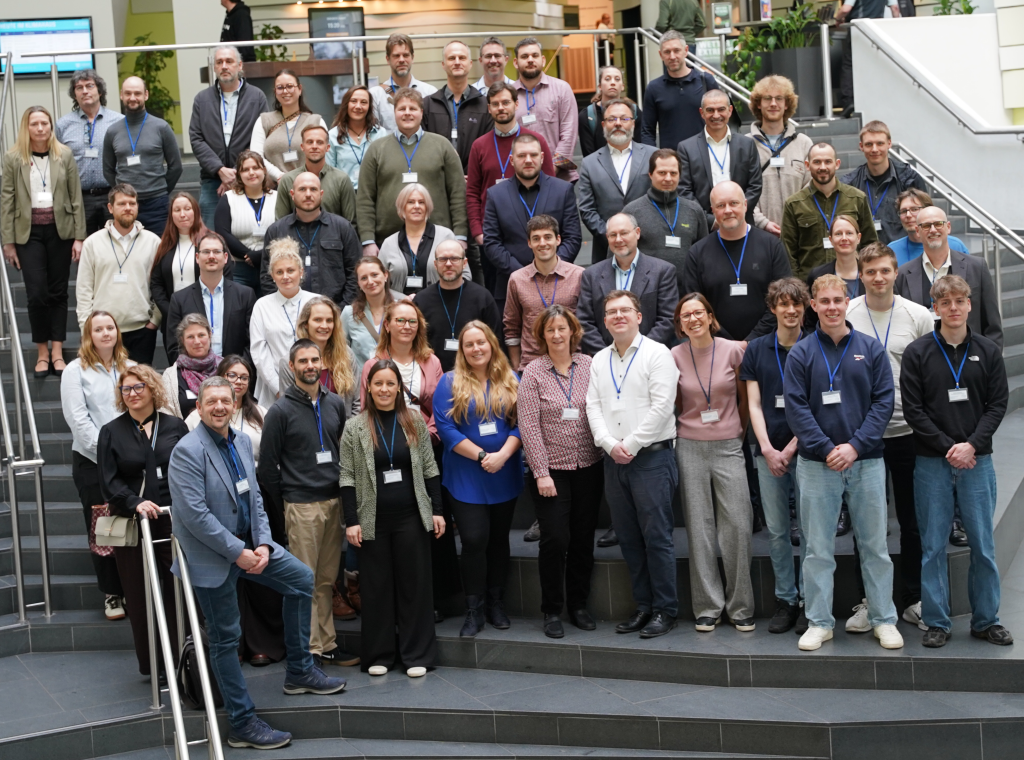
On 25 February 2026, the AQUALOOP International Conference “Strengthening Circular Economy and Valorisation of Side Streams in RAS Aquaculture” was successfully held at Klimahaus Bremerhaven (Germany) and online. As the final event of the INTERREG South Baltic project AquaLoop, the conference brought together more than 70 participants from across Europe, including representatives of academia, industry, policymaking, and the next generation of aquaculture professionals.
Throughout the day, the conference showcased the project’s key achievements, including the valorisation of aquaculture side streams, the development of circular Recirculating Aquaculture Systems (RAS) concepts, and a wide range of knowledge transfer and training activities across the South Baltic region. Participants explored the results of three pilot initiatives focused on circular aquaculture solutions, alongside practical recommendations supporting their implementation in the industry.
The conference was opened by Adrian Bischoff-Lang (University of Rostock), who set the tone for a day dedicated to innovation, collaboration, and knowledge exchange. Keynote speakers highlighted both the urgency of transitioning towards a resource-efficient circular economy and the practical challenges associated with applying these principles in commercial aquaculture.
The programme was structured around three thematic sessions reflecting the project’s core priorities. The first session, Closing the Nutrient Loop & Byproduct Valorisation, focused on innovative ways to transform aquaculture waste streams into valuable resources, including approaches such as microalgae cultivation, nutrient recovery, and sludge mitigation. The second session, Stakeholder Support & Consumer Perspectives, explored policy frameworks, business development strategies, and consumer attitudes, demonstrating how cooperation between producers, academia, and institutions can drive the adoption of circular solutions. The final session, Training and Capacity Building in the Circular Economy, addressed education and skills development, highlighting AquaLoop’s training initiatives, student exchange programmes, and the competencies needed for the future of sustainable aquaculture. Each session concluded with lively panel discussions, encouraging active dialogue and exchange between speakers and participants.
Beyond the formal programme, the conference offered valuable opportunities for networking, partnership building, and increasing visibility within an international community focused on sustainable aquaculture. Participants engaged in informal discussions during breaks, explored a mini exhibition, and took part in a unique “RAS tasting” experience, further strengthening connections across sectors.
On 26 February 2026, selected participants continued the exchange during dedicated study visits to leading facilities in Bremerhaven. These included the Centre of Aquaculture Research at the Alfred Wegener Institute (AWI) and the Technology Transfer Center (ttz). The visits provided hands-on insights into advanced RAS infrastructure, aquaculture research, and innovations such as fish feed development and applied solutions within the blue bioeconomy.
The event marked an important milestone, concluding the AquaLoop project implemented by seven international partners: University of Rostock (Germany), University of Gdańsk (Poland), Klaipėda University (Lithuania), Guldborgsund Municipality (Denmark), Fish Market Development Association (Poland), Scandinavian Aquasystems AB (Sweden), and VKST (Denmark). With over 70 participants and a programme successfully bridging science, practice, and policy, the AQUALOOP International Conference fulfilled its objective of inspiring, connecting, and informing stakeholders across the sector. As the concluding event of the AquaLoop project, it not only presented concrete results and practical solutions but also reinforced the importance of continued cross-border cooperation in advancing circular economy approaches in aquaculture.
The strong engagement and positive feedback from participants confirm that the conference represents a significant step forward in building a more sustainable and resource-efficient aquaculture sector in the South Baltic region and beyond.
BlueBioeconomy – on the AquaLoop International Conference
Magazyn Przemysłu Rybnego – on AquaLoop International Conference (in Polish)
Conference presentations
OPENING SESSION
Challenges and constraints of implementing circular economy into commercial aquaculture production
The Need for a of Resource-Efficient Circular Economy
AQUALOOP – Aquaculture expert floor for circular economy practice
SESSION 1: Closing the Nutrient Loop & Byproduct Valorisation
By-products characterization and valorisation of African Catfish (Clarias gariepinus Burchell, 1822)
SESSION 2: Stakeholder Support & Consumer Perspectives
Gardsfisk – An integrated, land-based circular fish farming – Swedish case and the potential for side-stream utilization
The value of project participation in business development
Stakeholder support knowledge transfer and consumer perception_evidence from Polish aquaculture
SESSION 3: Training and Capacity Building in Circular Economy
AquaLoop cross-border student exchange program
Training and Capacity Building in Circular Economy
BBT MOOC Advancing Skills in aquaculture and other blue bioeconomy